The Age of Choice is Coming to Identity
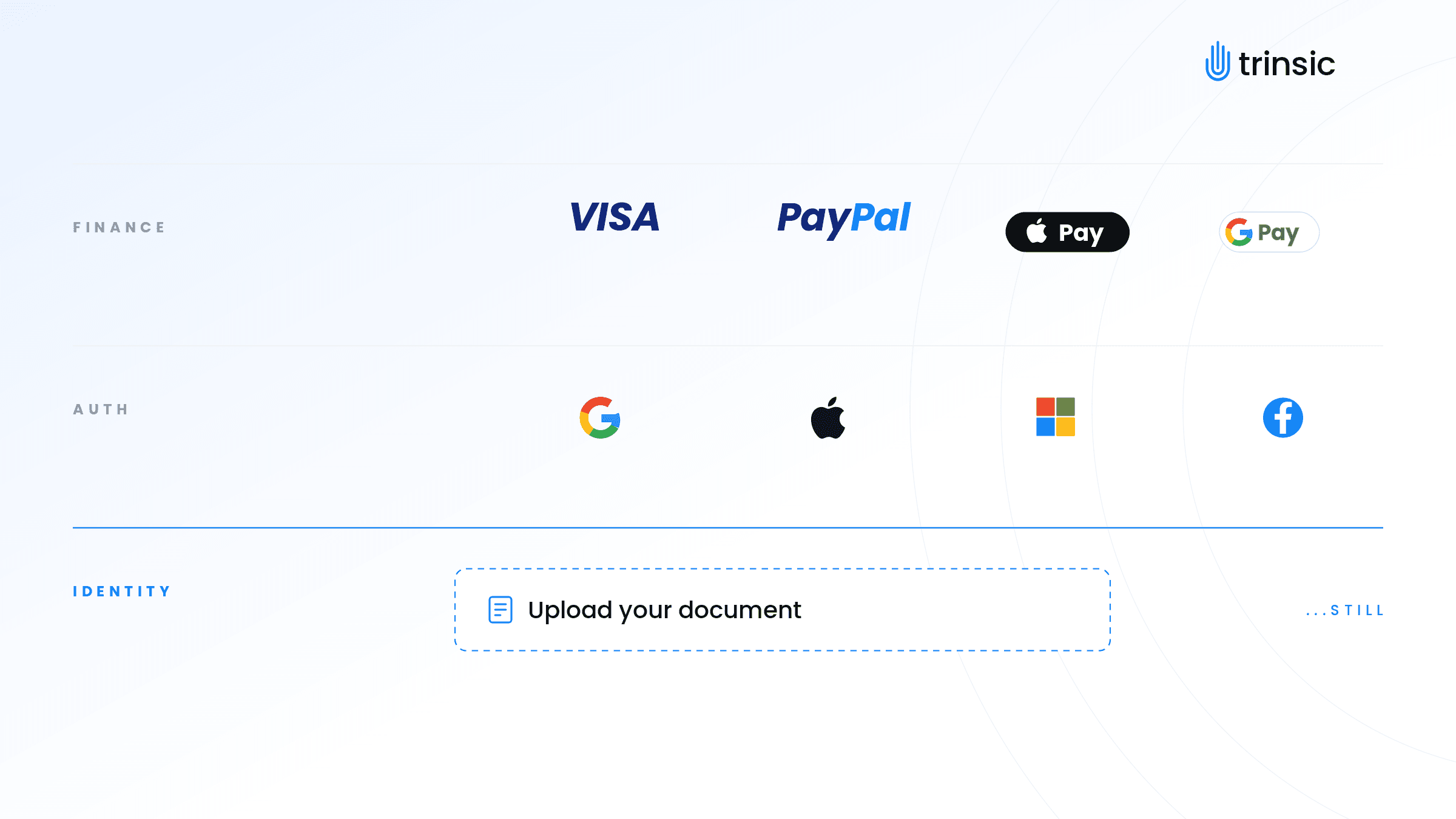
Payments became a menu. Login became a menu. Identity is still asking you to upload your passport.
For most of the internet's life, three of its most important interactions worked the same way: there was one mandatory method, and you took it.
You paid with a credit card. You signed in with a username and a password. You proved who you were by uploading a photo of a document.
Two of those have changed. One hasn't. That gap is the most interesting business opportunity in digital identity today, and it's exactly what Trinsic exists to close.
The pattern: one method becomes a menu
Look across consumer software over the last decade and the same story plays out in domain after domain. A single mandatory path gets replaced by a curated set of equally valid ones, and the customer picks the path that fits their life.
It happened in finance. It happened in auth. It has not happened in identity.
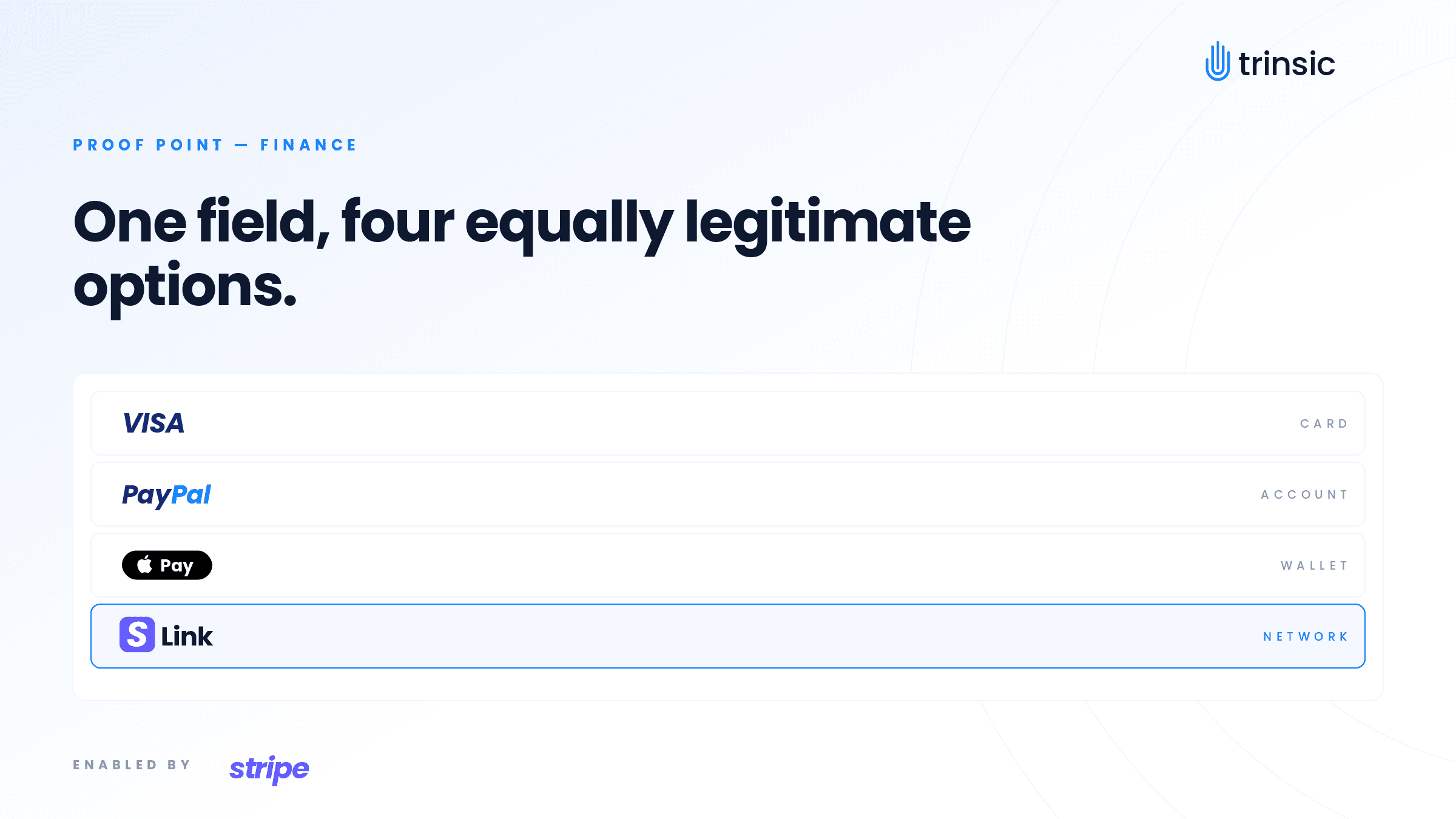
Proof point #1 — Finance: the checkout became a menu
Credit cards didn't disappear. They just stopped being the only answer.
A modern checkout offers a short, deliberate list:
Credit card — the default
PayPal — the account
Apple Pay — the wallet
Link — the network
The merchant doesn't decide which is "real" payment anymore. The customer does, based on what's already in their phone, their browser, or their habits.
This shift didn't happen by accident. It happened because aggregators like Stripe turned "support every payment method" from a year of integration work into a single line of code. One integration, many methods. The cost of offering choice collapsed, so choice became the standard.
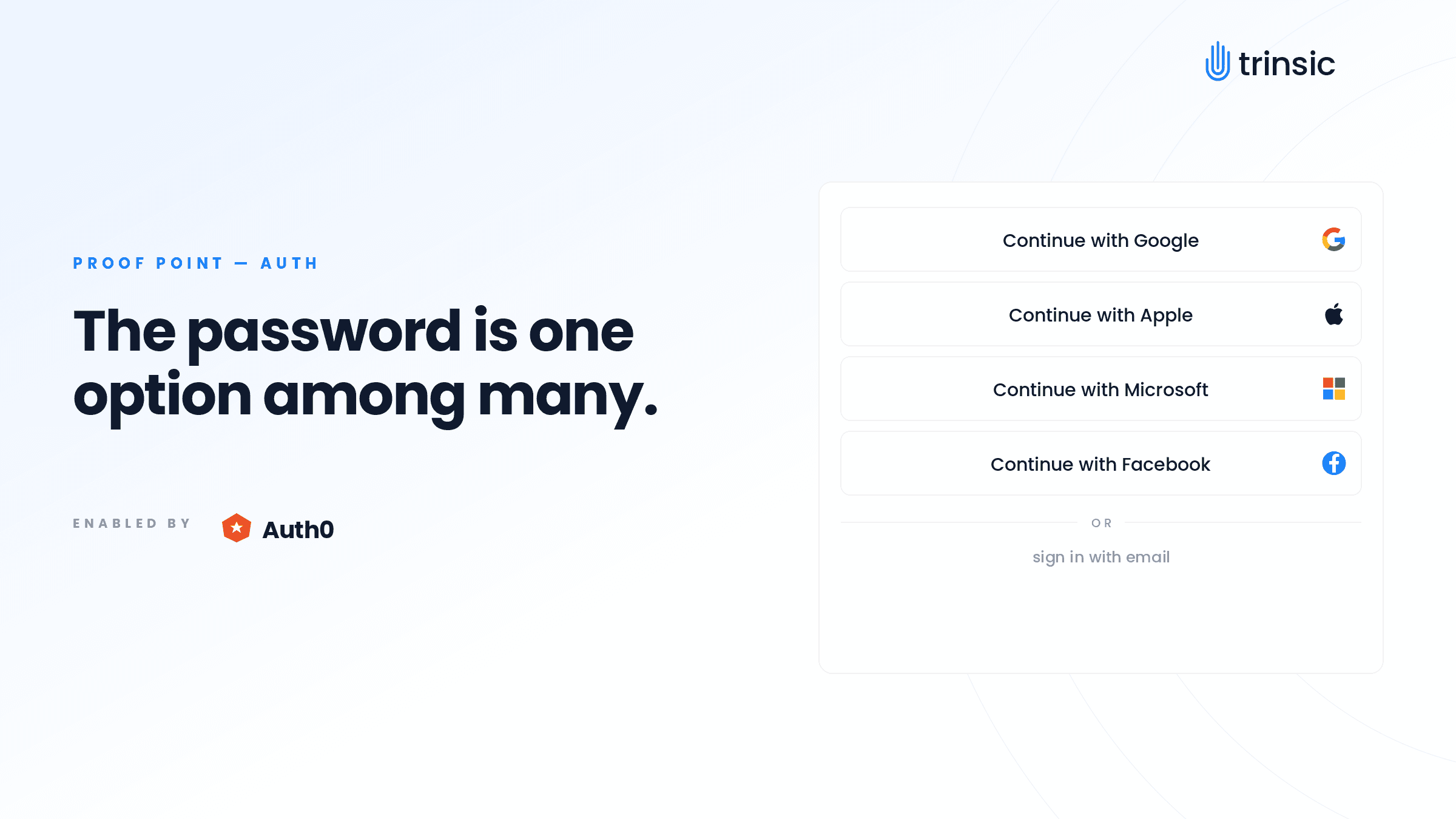
Proof point #2 — Auth: the password is one option among many
The sign-in screen used to ask one question. Now it offers the identity the user already has.
Username + password — still there, no longer the headline
Continue with Google
Continue with Microsoft
Continue with Apple
Same pattern. Same enabler: aggregators like Auth0, Clerk, and WorkOS turned "support every identity provider" into a drop-in component. Once that integration cost went to zero, every sign-in screen on the internet became a menu.
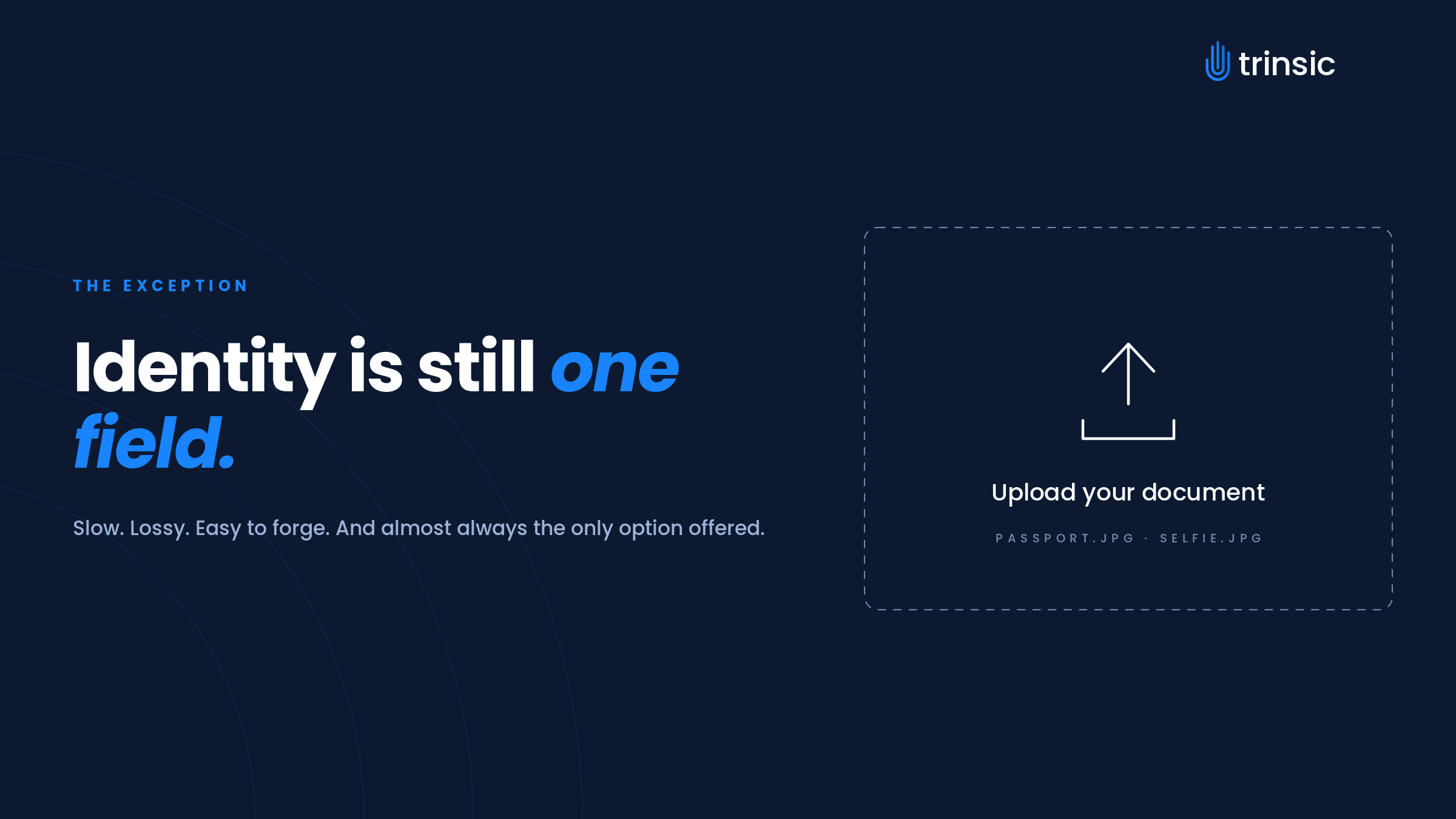
The exception — Identity is still a photograph of a document
Now look at identity verification in 2026.
Open almost any onboarding flow, a bank, a marketplace, a crypto exchange, a rental platform, and you'll see the same screen you saw ten years ago: take a selfie, upload your passport, wait. Slow. Lossy. Easy to forge. And almost always the only option offered.
This isn't because better options don't exist. They very much do:
SPID and CIE ID in Italy
BankID across the Nordics
Aadhaar in India
Mobile Driver's Licenses (mDL) rolling out US state-by-state
EUDI Wallet coming online across the EU
Digital identity exists. The problem is that every scheme is a separate SDK, a separate legal contract, a separate compliance review, and a separate user experience. For a product team trying to ship onboarding for a global audience, supporting even three of them is a quarter of work. Supporting all of them is a full-time team.
So most teams do what's rational under those constraints: they don't. They ship the document upload, they live with the drop-off, and they tell themselves they'll get to it later.
The aggregator pattern, applied to identity
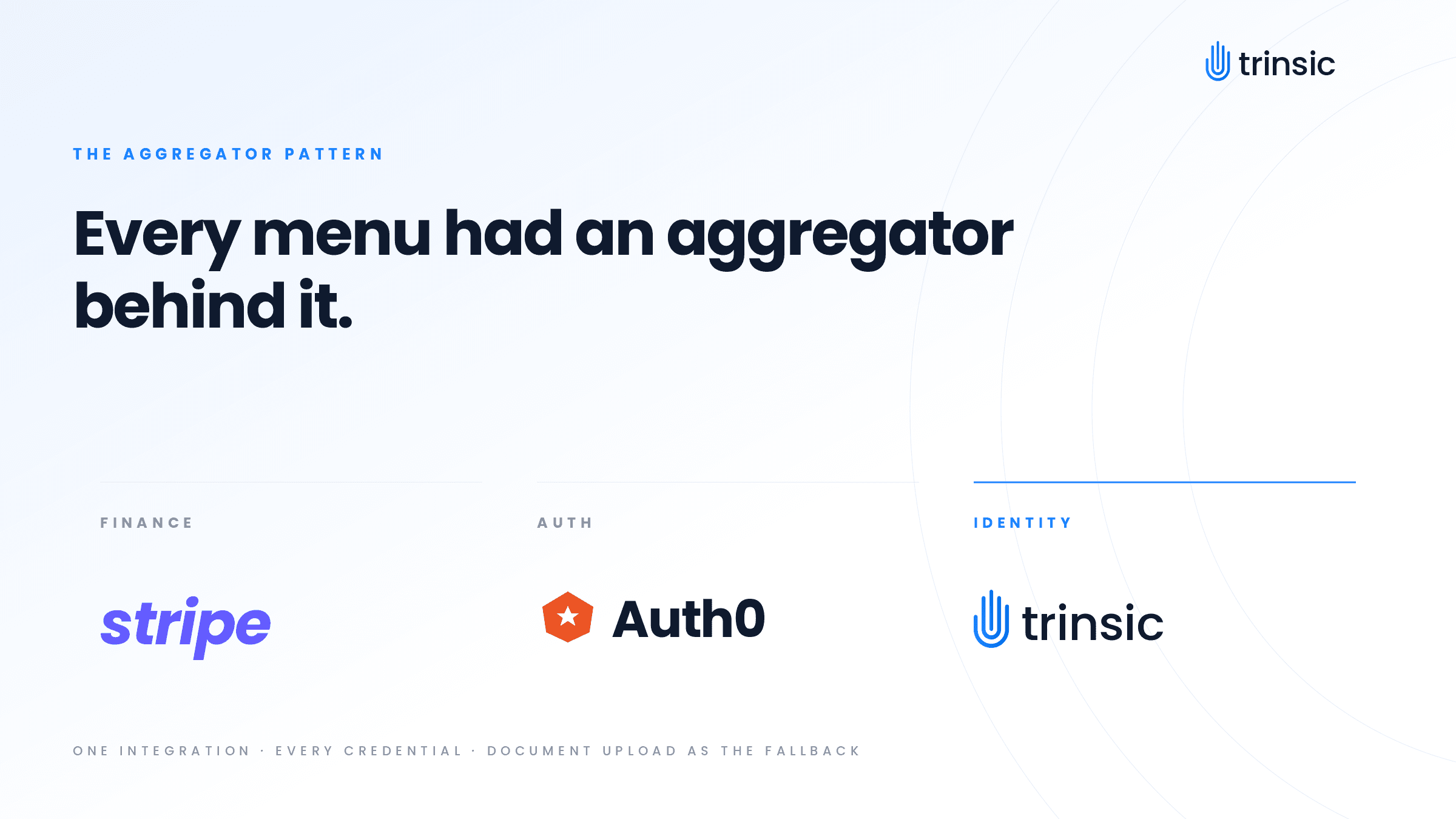
Every domain that became a menu, became a menu through an aggregator.
Domain - Then - Aggregator that unlocked choice
Finance - Credit card - Stripe
Auth - Username + password - Auth0
Identity - Document upload - Trinsic
Trinsic does for digital identity what Stripe did for payments and Auth0 did for login. One integration. Every digital ID scheme worth supporting. The user picks the credential they already have, their BankID, their mDL, their EUDI Wallet, their SPID, and you fall back to document upload only when there is genuinely no better option for that user.
The result is the same shift you've already lived through twice:
A faster, higher-trust user experience
Higher conversion through onboarding
A flow that respects what the user already carries
Coverage that grows as new schemes come online, without you re-integrating
The takeaway
The product stopped choosing for the user in finance. The product stopped choosing for the user in auth. Identity is the last domain where it still does, and only because the integration cost has been too high for any one team to absorb alone.
Trinsic is what makes that cost go away.
Identity is the last single-method domain. Trinsic is how it stops being one.
Newsletter
Subscribe to weekly insights and updates in the digital ID ecosystem.