KYC verification is moving from documents to wallets. Be ready first.
AMLR applies July 10, 2027, and banks must accept EUDI wallets under eIDAS 2.0. Trinsic turns those hard deadlines into a conversion advantage — accept bank IDs, eIDs, and wallets for onboarding through one API across 50+ countries.

Wallet-based KYC is already the standard
BankID verifies 97% of Norwegian adults; itsme reaches 80% in Belgium; MitID covers 93% of Denmark — bank-grade onboarding on reusable IDs is proven at national scale. Now the EU is making it law: every member state ships an EUDI wallet by December 2026, regulated financial institutions must accept them from December 2027, and AMLR makes wallet identification valid customer due diligence from July 10, 2027.
Trinsic offers compliant onboarding, one API
Connect through Trinsic once and inherit eIDAS assurance mapping, AMLR-ready audit trails, and coverage across bank IDs, national eIDs, and EUDI wallets. We embrace the regulatory complexity so your compliance and engineering teams don’t have to.
Aggregation
One integration, every eID and wallet
BankID, itsme, MitID, iDIN, SPID, and EUDI wallets as they launch — every scheme appears in your existing integration, with relying-party registrations and certificates handled.
Interface
Audit-ready by design
Cryptographically signed results, normalized assurance levels, and time-stamped verification records — the auditable dataset AMLR expects, designed in from day one.
Conversion
Onboard in seconds, not sessions
Document capture loses 20–40% of users before completion. Verifying with an ID your customer already holds is up to 10x faster and roughly doubles conversion.
Live now
Demo bank-grade verification today
The highest-adoption bank IDs and eIDs in Europe are live on the network now, and EUDI wallets are integrated ahead of the mandate. Start your compliance data window early.
Bank IDs are one category in a planet-wide network
With Trinsic, bank IDs sit alongside national eIDs, mobile driver’s licenses, and EUDI wallets in a single network spanning 50+ countries. Mix and match the right method per market as your footprint grows.

















Trust tops our priority list
Your regulators expect data minimization, consent, and provable security. So does Trinsic. We’re designed from the ground up with security, privacy, and compliance practices that exceed industry best practice.
Zero-access encryption
Customer verification data can’t be accessed at rest, even by Trinsic.
Consent & data minimization
Request only the attributes a use case needs; honor the wallet’s consent and selective-disclosure model.
Assurance you can map
We translate local and eIDAS levels of assurance into one common model, so you know exactly what to trust.
Certified & audited
SOC 2 Type II and GDPR-aligned, with reports and attestations available on request.
Resources
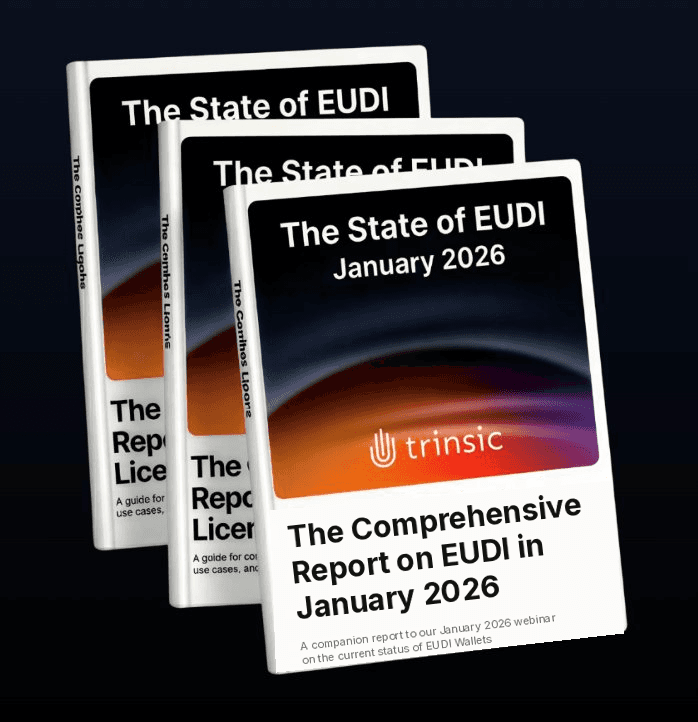
Get the definitive guide to EUDI
The State of EUDI breaks down member-state timelines, assurance levels, and what regulated businesses should be doing before the 2027 acceptance mandate. Everything our identity experts track, in one report.
Download the EUDI ebook
Fintech KYC, answered
What is KYC?
What is a KYC API?
What is KYC onboarding?
What does AMLR change for KYC?
When do banks have to accept EUDI wallets?
Can reusable IDs really carry bank-grade KYC?
Do I need to build wallet infrastructure?
What’s the business case beyond compliance?
How do I get started?
Book a call